board: atlas category: projects/atlas kind: main series: ATLAS episode: 5 seriesTotal: 12 visibility: published lang: en publishedAt: 2026-05-21 thumbnail: /api/images/file/8e94364987a11d55.png titleKo: 메모 앱 대신, 지식 시스템을 만들기로 했다 titleEn: Instead of a Note App, I Built a Knowledge System excerptKo: Claude를 이기려는 시도를 접고 나니 질문 하나가 남았다 — 모델이 아니라면, 무엇이 내 것으로 남는가. 답은 지식이었다. Obsidian을 진지하게 고민한 끝에, 결국 직접 만들기로 했다. excerptEn: Once I stopped trying to beat Claude, one question was left — if not the model, what actually stays mine? The answer was knowledge. I looked hard at Obsidian, and ended up building my own.
The question left after I stopped trying to beat Claude
At the end of the previous post, I had already reached one conclusion: beating Claude is hard.
So I stopped. I dropped the attempt to build my own agent that could outperform Claude — the LangGraph orchestration I had been wiring, and the custom chatbot on top of it, all of it.
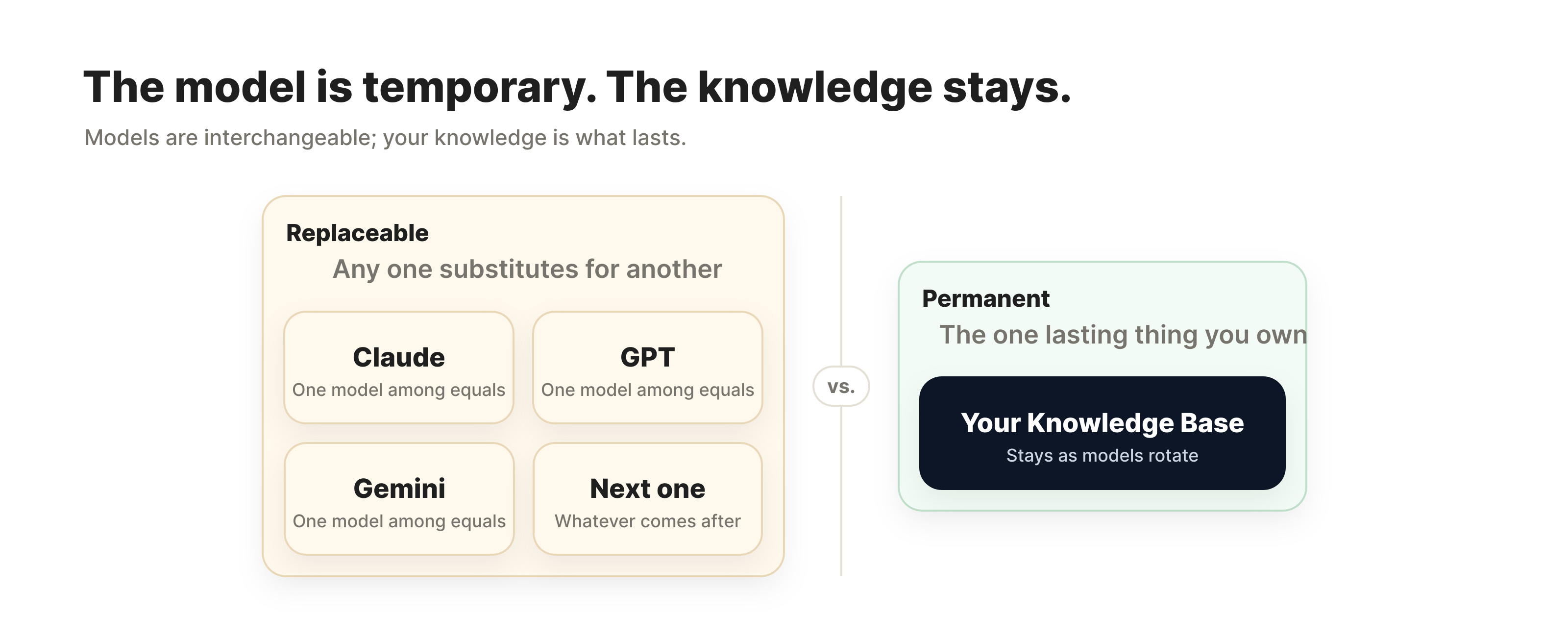
Once that was gone, only one question remained. If the model isn't the thing that stays mine, then what is?
The answer was knowledge. Models keep improving; they get swapped out every few months. But the knowledge I accumulate has to keep living somewhere.
Leaving notes was never the hard part
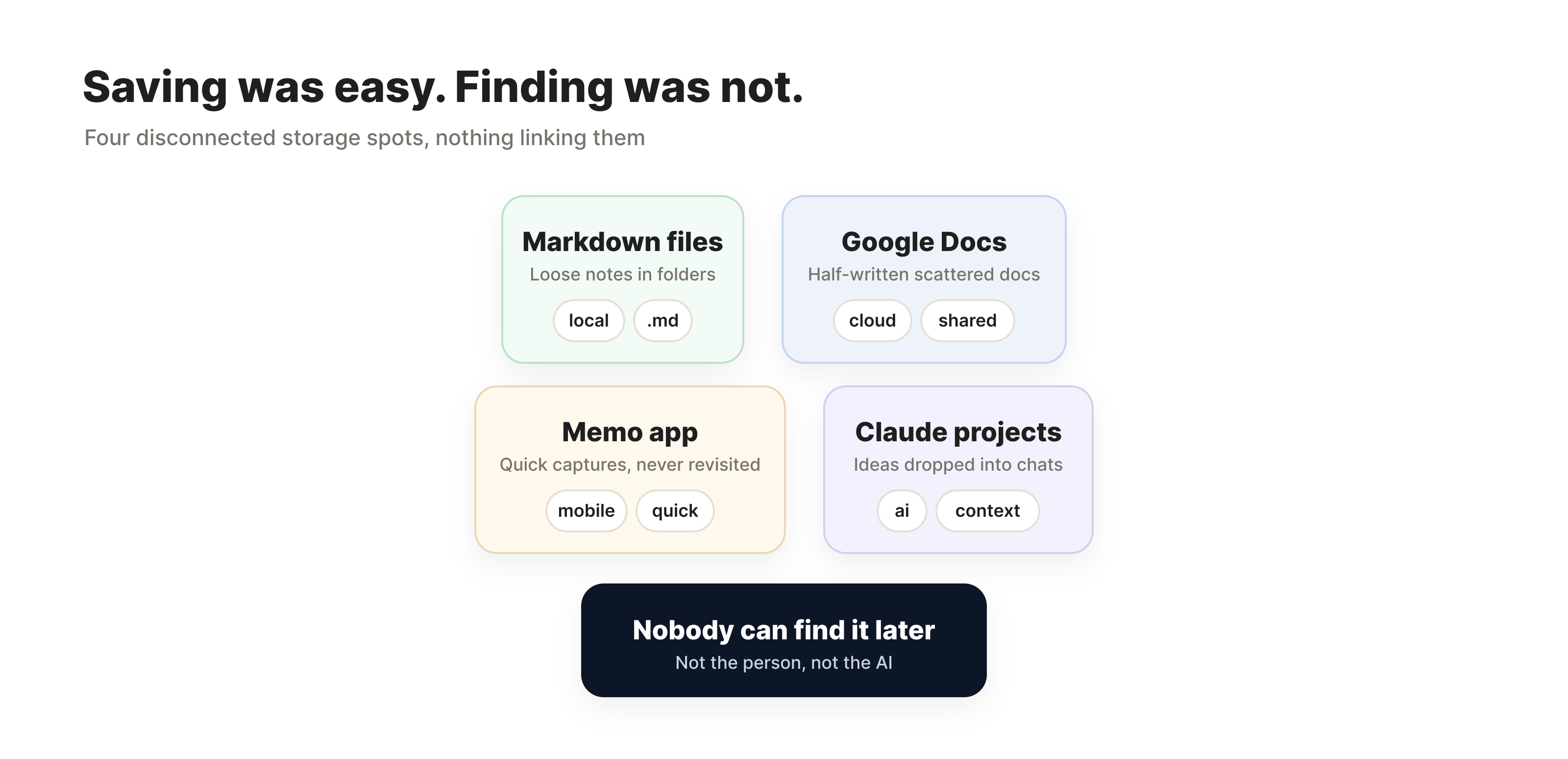
At first I saved things everywhere. Markdown files. Google Docs. A plain memo app. Claude projects.
Saving was easy. The problem was getting anything back.
Every time, the same questions. Where did I save that? What did I call it? The AI couldn't find it, and neither could I.
A record you can pile up but never pull back out isn't really a record.
I seriously considered Obsidian
This is where Obsidian first came in.
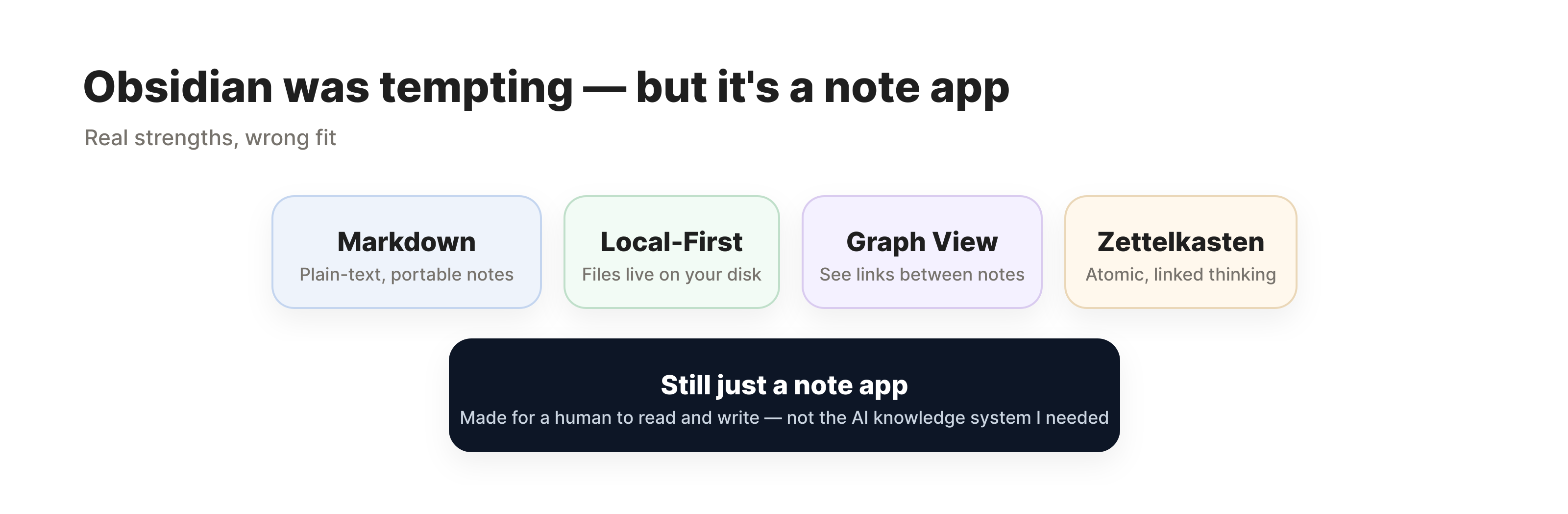
What drew me was clear: Markdown, Local-First, a graph view, Zettelkasten. Every one of those was a word I already wanted.
I actually used it for a few days. And using it is what made me realize something — what I wanted wasn't a better note app.
What I wanted was not a note app
This is the core of it.
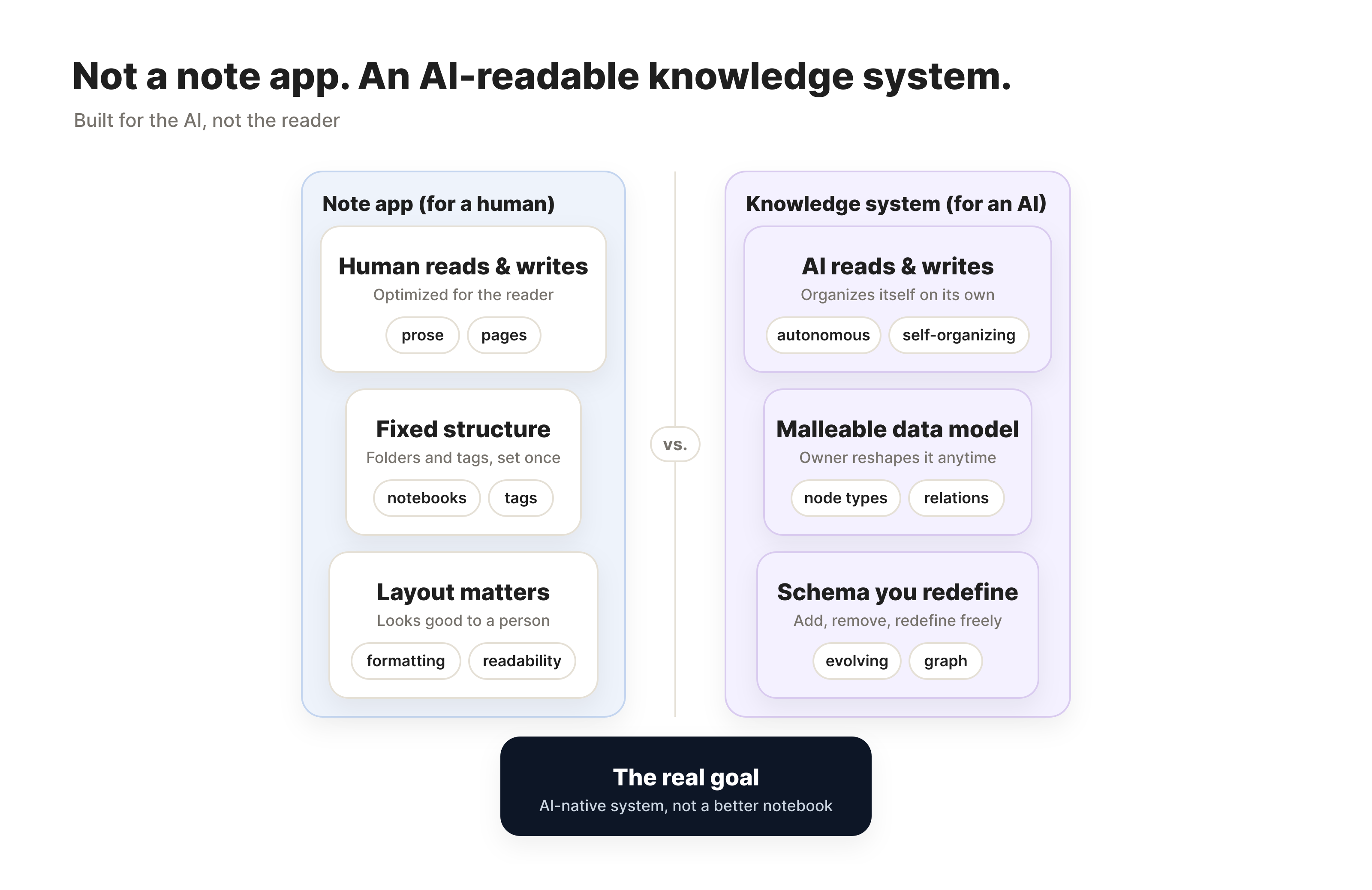
Obsidian is an excellent note app. It's optimized for a human to read and write.
But what I wanted was a knowledge system that an AI reads, an AI writes, and an AI organizes on its own. And one more thing: a data model I could keep reshaping however I wanted — attaching and removing node types, redefining relations. You can't run those experiments on top of someone else's note app.
(Honestly, I gave up Local-First too. For an AI to reach my knowledge from anywhere, it needed the cloud. I let go of the condition I liked most, because a structure an AI can actually operate on mattered more.)
Memory had to stay free
This is the real reason I chose Markdown.
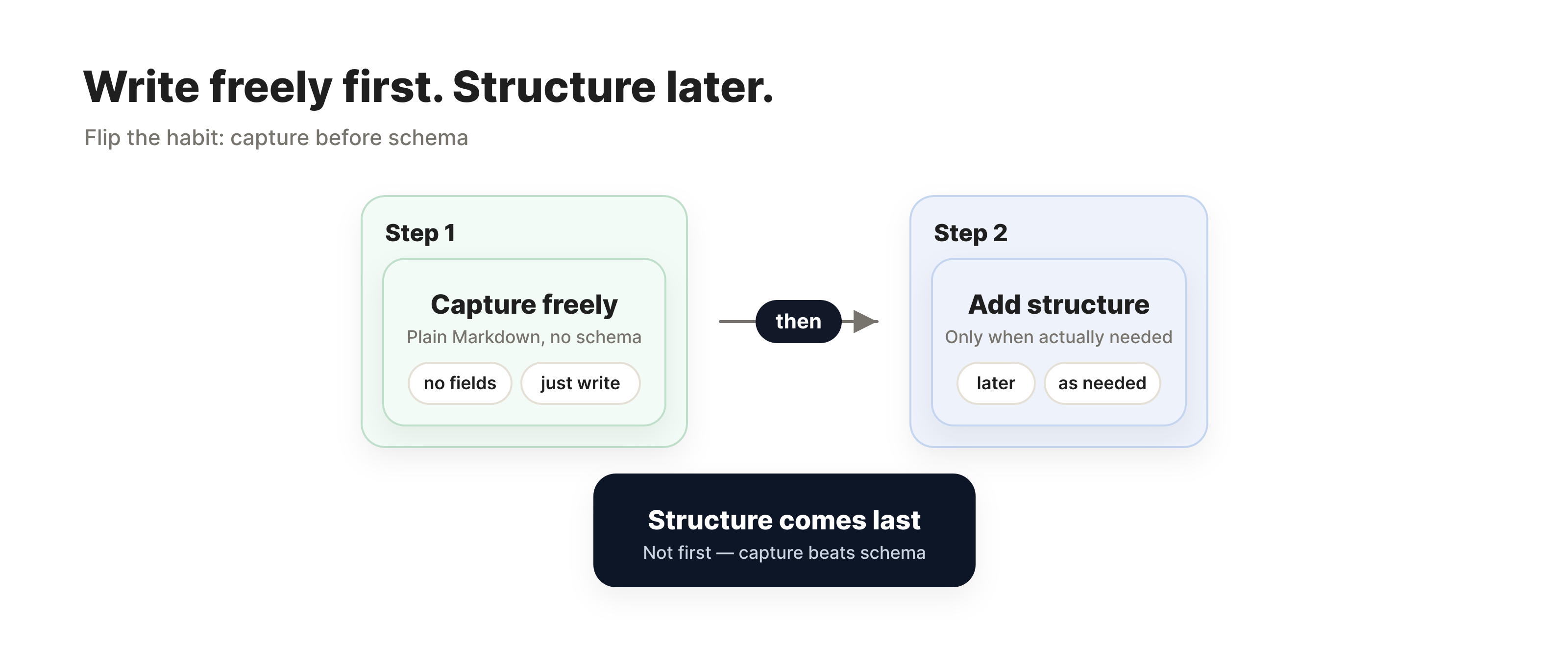
I didn't want to nail down a schema up front the way JSON forces you to.
Real life and real projects turned out far messier than anything I would have designed in advance. So I flipped the order: capture freely first, and impose structure later, only when it's actually needed.
(Working on an AX project at my company taught me the same thing the hard way — start by formalizing everything, and nothing ever accumulates.)
But a graph alone was not enough
Here's the thread into the next post.
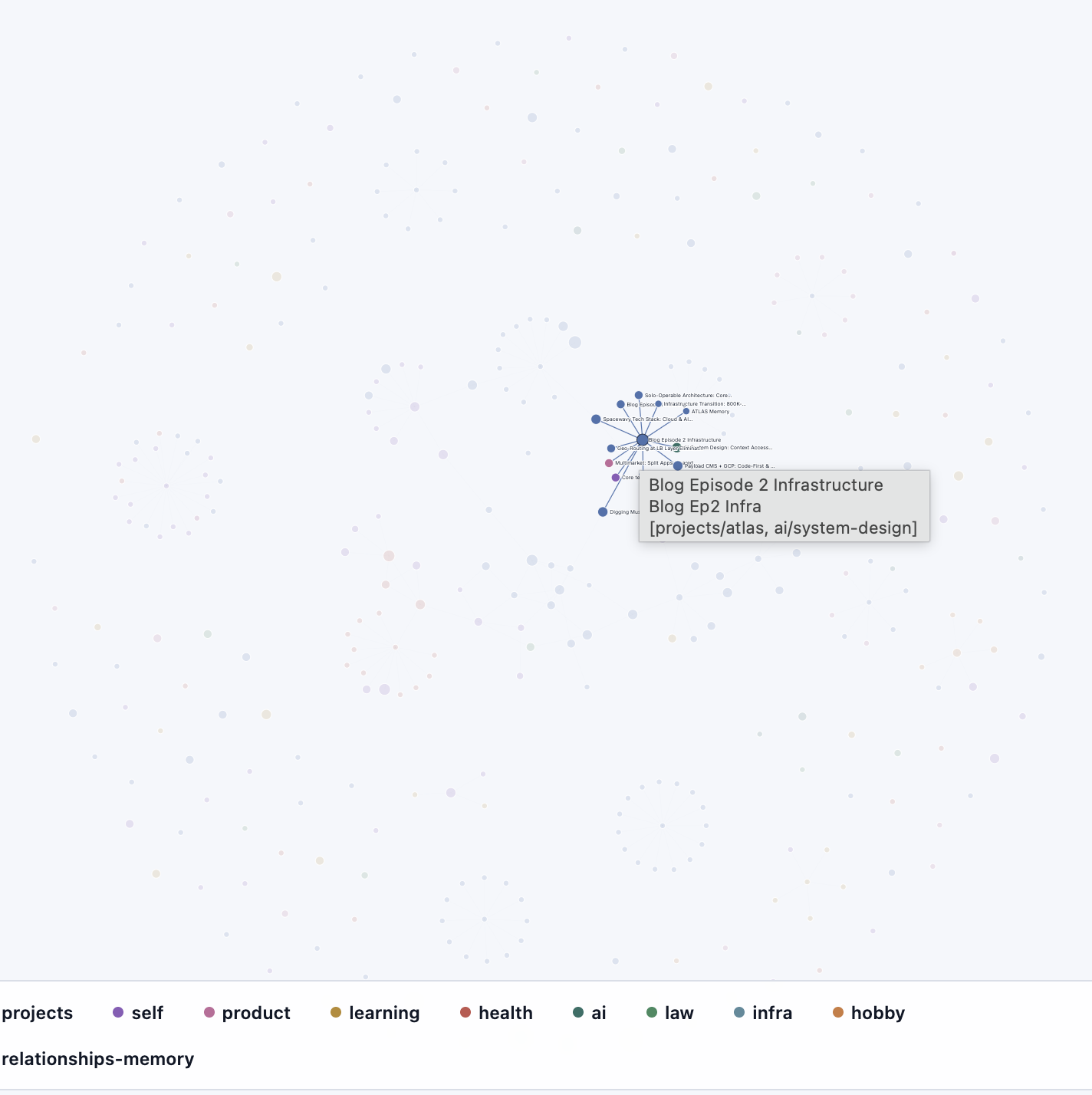
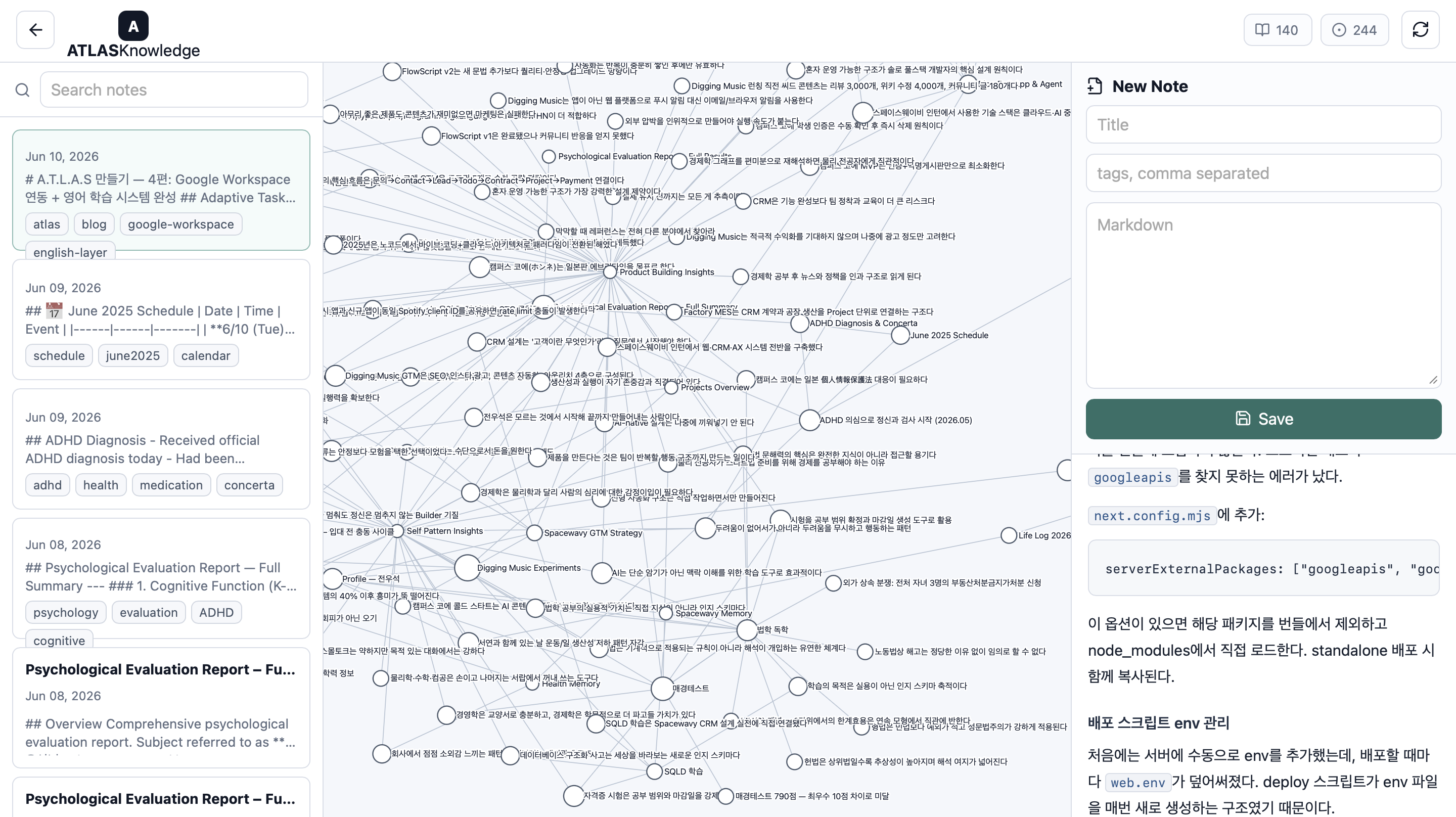
Once I connected the notes, a graph appeared. It looked great.
But as the notes grew, the graph turned into a maze. So I started attaching tags — and those tags slowly began to evolve on their own.
In the next post: how ATLAS's node structure became what it is today.